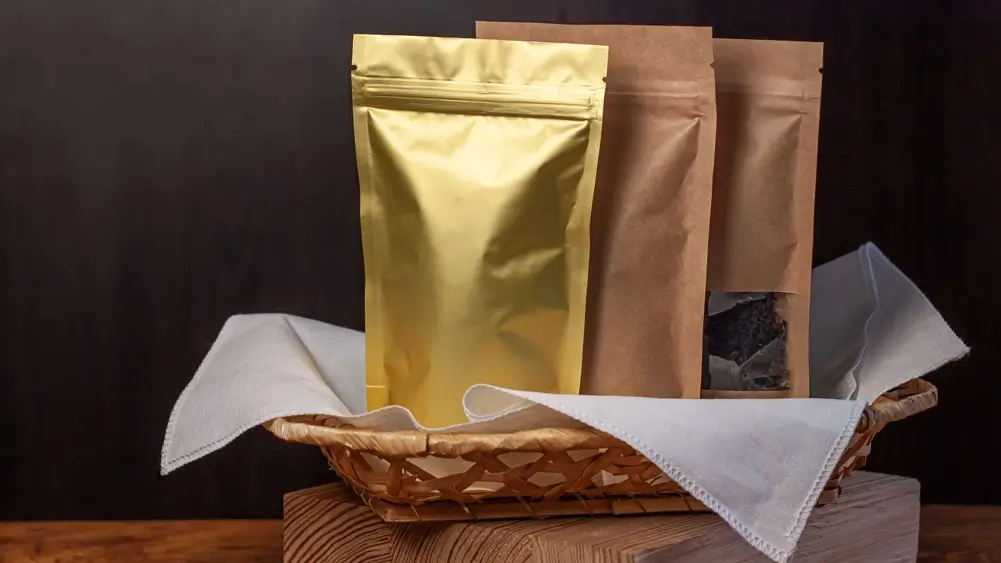
Mylar bags are flexible, multi-layer pouches built around a core of metallized polyester film, often combined with aluminum foil and a polyethylene inner seal to create an airtight, moisture-proof and light-resistant barrier.
They help protect products from oxygen, UV exposure and humidity while extending shelf life and maintaining product quality. For U.S. brands in food, supplements, coffee, beauty and pet care, mylar bags remain one of the most cost-effective, durable and retail-ready flexible packaging solutions available today.
If your products are losing freshness before they reach customers, arriving damp, or your bags keep tearing in transit, your product isn't the problem. Your packaging is.
Mylar bags and mailer bags are two of the most widely used flexible packaging formats for USA product brands across food, supplements, coffee, beauty and pet care. But they solve different problems and choosing the wrong one costs you customers and money.
This guide answers your questions, gives you an honest look at where mylar bags shine and where they don't and shows you how Labels Lab's custom pouches and flexible packaging solutions can take your brand from idea to shelf.
Mylar Bags vs. Regular Plastic vs. Glass vs. Rigid Containers - Which Wins for Your Brand?
| Mylar Bag | Regular Plastic Bag | Glass Jar | Rigid Plastic Tub | |
|---|---|---|---|---|
| Barrier protection | ★★★★★ | ★★☆☆☆ | ★★★★★ | ★★★☆☆ |
| Shipping weight | Very light | Light | Heavy | Medium-heavy |
| Shelf presence | High (custom print) | Low | High | Medium |
| Cost per unit | Low-medium | Low | High | Medium |
| Custom MOQ | 500-1,000 units | High (tooling) | High (tooling) | High (tooling) |
| Storage before fill | Flat, space-efficient | Flat | Bulky | Bulky |
| Sustainability options | Recyclable/compostable available | Limited | Recyclable | Limited |
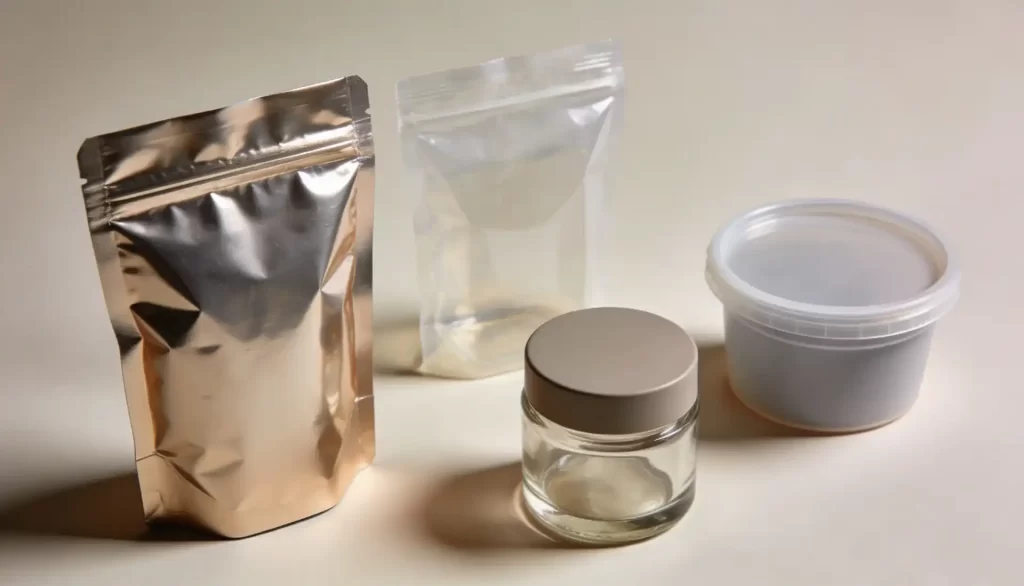
The pattern is clear: mylar bags win on the combination of barrier performance, brand presentation and flexible order quantities. Glass wins on premium positioning but loses badly on shipping cost. Regular plastic loses on barrier performance for anything sensitive to air or moisture.
There's also a pre-production advantage that often gets overlooked: flat flexible pouches ship and store far more efficiently than pre-formed rigid containers before they're even filled. You can hold thousands of unfilled pouches in the same space it takes to store a few hundred bottles or tubs, which matters a lot for brands managing warehouse space or doing contract fill runs.
What Real Packaging Problems Do Mylar Bags Solve?
Before getting deeper into mylar bags, let's talk about what they fix, because that's probably what brought you here.
Problem 1: Your product loses freshness, flavor or potency too fast. If your coffee tastes stale two weeks after roasting, your supplements are clumping from moisture, or your dried snacks are going soft, the issue is usually your packaging letting air and moisture pass through. Mylar bags create an airtight barrier that regular plastic simply can't match.
Problem 2: Your bags look cheap compared to competitors on the shelf. A flimsy, unclear plastic bag undermines a premium product instantly. A well-printed matte or glossy mylar stand-up pouch can look as premium as glass, at a fraction of the cost. Brands like specialty coffee roasters, skincare founders and D2C supplement companies use mylar specifically because the shelf presence rivals rigid packaging without the weight or shipping cost.
Problem 3: Your current packaging is killing your shipping economics. Rigid containers (glass jars, tins, plastic tubs) are heavy and bulky. For e-commerce and DTC brands, that weight directly affects carrier fees on every single order. A mylar pouch holds the same fill volume at a fraction of the weight.
Problem 4: You're not ready to order 10,000 units but need custom branding. Traditional packaging printing came with expensive setup fees that locked out small and emerging brands. Today, digital printing on custom mylar bags lets you start at 500-1,000 units without the $2,000+ setup cost. You can test your packaging with real customers before scaling up.
Mylar Bags vs. Mailer Bags - What's the Difference?
| Feature | Mylar Bag | Mailer Bag |
|---|---|---|
| Primary purpose | Product freshness & barrier protection | Shipping & transit protection |
| Core material | Metallized polyester (BoPET) + aluminum layer | Polyethylene (poly) or kraft-lined poly |
| Barrier properties | Airtight, moisture-proof, light-blocking | Water-resistant outer shell |
| Best for | Shelf products, food, supplements, beauty | Shipping finished goods DTC or via retail |
| Typical format | Stand-up pouch, flat pouch, sachet | Padded envelope or flat poly mailer |
| Customization | Full-color printing, multiple finishes | Logo printing, color options |
| Resealable? | Yes (zipper options available) | Usually no - single-use seal |
The practical takeaway: Many brands actually need both. Your product might be packaged in a custom mylar pouch for product protection and branding and then shipped inside a mailer bag for transit. They work at different stages of the customer journey, not as alternatives to each other.
What Exactly Is a Mylar Bag?
The word "mylar" is technically a registered brand name originally owned by DuPont Teijin Films, used to describe a specific type of polyester film known as BoPET - biaxially-oriented polyethylene terephthalate. Over time, the term became the everyday shorthand for any metallized flexible packaging film with strong barrier properties, much like how "Band-Aid" became the word for adhesive bandages.
Today's commercial mylar bags used in product packaging are typically constructed with three or four laminated layers:
- Outer layer (PET/polyester film): This gives the bag its printability, tear resistance and overall structure. It's what your graphics go on.
- Middle layer (aluminum foil or metallized film): This is the powerhouse. Aluminum creates a near-impenetrable barrier against oxygen, UV light, moisture and odor.
- Inner layer (polyethylene or polypropylene): This food-safe layer is what comes into contact with your product. It also makes the bag heat-sealable.
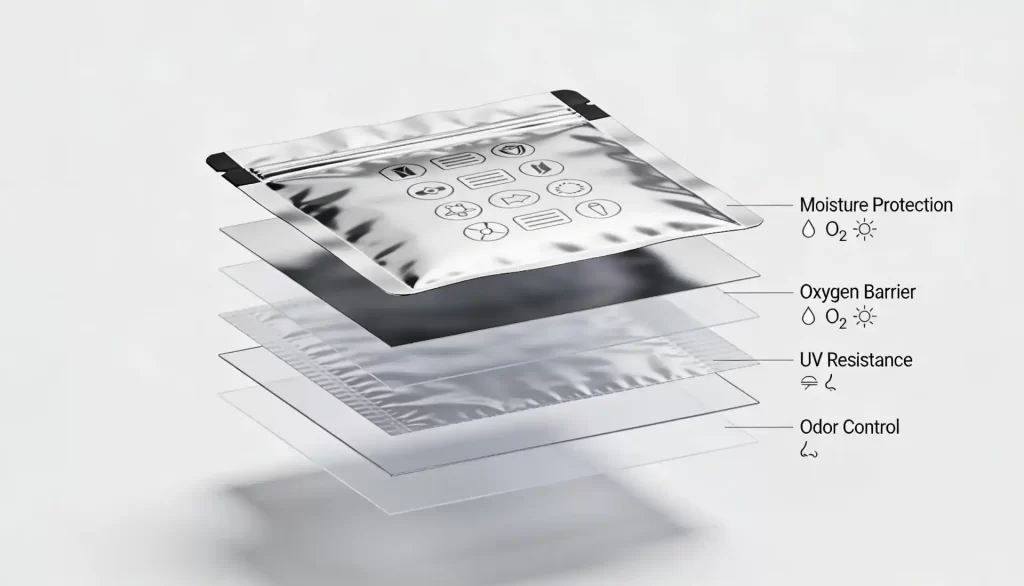
Some higher-performance versions add a fourth layer - often a nylon barrier - for extra durability or puncture resistance, especially for heavier products like pet food or bulk dry goods.
The result is a packaging format that's lightweight, fully customizable and dramatically more protective than plain plastic bags or kraft paper alone.
Is a Mylar Bag Right for Your Product? The 5-Question Test
Most blog posts just list the benefits of mylar bags - but that doesn't actually help you decide if they're the right move for your product. Here's a practical decision framework:
1. Does your product degrade from exposure to air, moisture or light?
If yes, then mylar's barrier properties are directly relevant. If your product is a candle, a print or a piece of hardware, the barrier matters less than other packaging properties.
2. Does your product need to stand on a retail shelf?
If yes, then a stand-up mylar pouch with a bottom gusset is likely the right format. If your product ships DTC or sits in a box, flat pouches work fine and cost less.
3. Do your customers open and close the packaging repeatedly?
If yes, then a resealable zipper closure is worth the marginal cost increase. If the product is single-use or bulk, heat-seal-only is simpler and cheaper.
4. Do you need child-resistant packaging?
If yes, then mylar bags with push-lock, squeeze-and-slide or exit-bag closures are available. Labels Lab specializes in custom child-resistant pouches and flexible packaging for cannabis, supplement and wellness brands.
5. What's your minimum order quantity comfort level?
Testing digital printing on mylar lets you start at 500-1,000 units with no setup fees.
If you answered "yes" to two or more of the first four questions, mylar bags are very likely the right direction. The next step is figuring out the format and spec details - which our team can walk you through.
What Products Are Mylar Bags Best Used For?
Mylar bags work best for dry goods, powders, botanicals, supplements, cannabis, pet food, specialty coffee and any product where moisture or oxygen exposure shortens shelf life or changes product quality.
Here's a practical breakdown by industry:
Food and Snacks: Granola, trail mix, dried fruits, jerky, spices, nuts, dehydrated meals. The moisture and oxygen barrier is essential here. Brands selling through Amazon FBA or DTC subscriptions especially benefit from the lightweight, durable format. Check more about Food packaging from Labels Lab.
Coffee and Tea: Specialty roasters need more from their packaging than aesthetics alone. One-way degassing valves (which let CO₂ escape after roasting without letting oxygen in) are a standard add-on for coffee mylar bags. Explore coffee and tea pouch packaging options tailored for roasters.
Supplements and Vitamins: Protein powder, pre-workout, greens blends, capsule refill pouches - all benefit from mylar's opaque, airtight environment. Many supplement brands are moving away from plastic tubs toward resealable mylar stand-up pouches for both cost and sustainability reasons. See more about supplement pouch packaging from Labels Lab.
Cannabis and CBD: Child-resistant mylar bags have become the de facto standard for flower, edibles and concentrate packaging in legal US markets. The combination of odor-blocking, light-resistance and customizable child-resistant closures meets the practical needs of dispensaries and direct-to-consumer cannabis brands simultaneously. See Labels Lab's child-resistant mylar bag options.
Pet Food and Treats: Dog treats, cat food toppers, bird seed - mylar's moisture barrier and resealable zipper options make it the practical choice for pet care brands across retail and subscription channels.
Beauty and Skincare: Powder sachets, mask sheets, sample pouches and travel-size products are all well-suited to mylar. The flat sachet format in particular is popular for beauty sample giveaways and subscription box inserts. Check beauty packaging from Labels Lab for more details.
Where mylar bags are less ideal: Fresh produce that needs to breathe, products requiring transparency (if you want full product visibility, a clear stand-up pouch without metallization may be a better call) and anything that needs a rigid structure for protection during shipping - that's where boxes or blister packaging make more sense.
The Anatomy of a Custom Printed Mylar Bag - What You're Actually Ordering
When you order custom mylar bags through a packaging partner like Labels Lab, there are several variables that determine the final product:
Film Thickness (measured in microns or "mil"):
Standard mylar bags for retail products typically range from 3 to 5 mil. Heavy-duty bags for long-term storage or dense products like pet food or bulk supplements go up to 7 or 8 mil. Thicker bags resist punctures better but cost slightly more per unit.
Bag Style:
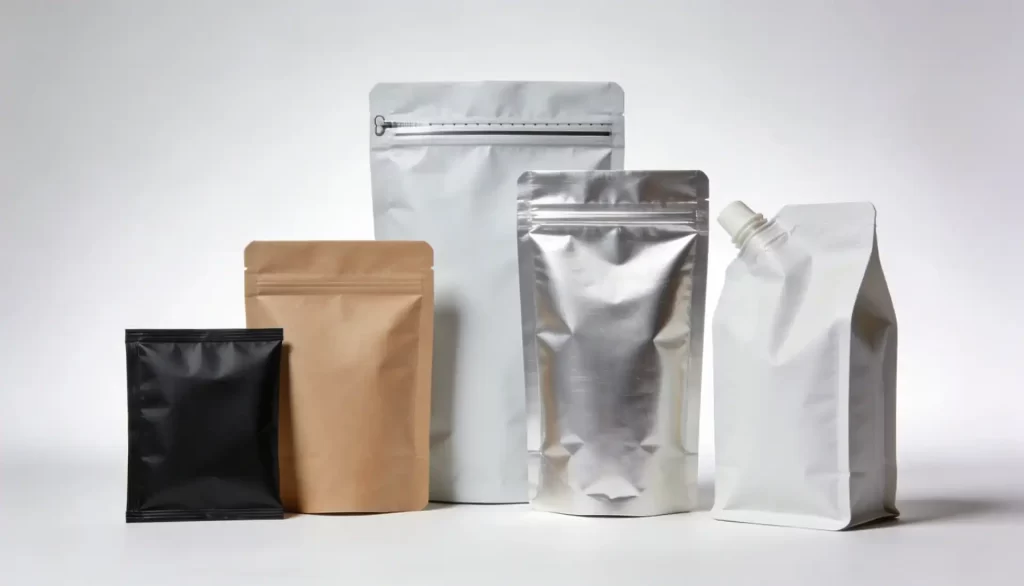
This is where product fit really matters. Common styles include:
- Flat three-side-seal pouches - the simplest and most compact format, best for samples, sachets and single-use products
- Stand-up pouches with bottom gusset - the most popular retail format, sits upright on a shelf, available with or without a zipper reseal
- Flat-bottom (quad seal) pouches - four side seals with a structured base, premium look, common in specialty coffee and supplement brands
- Side-gusset bags - popular for coffee and dry goods, allows more fill volume while keeping a flat front panel for printing
- Spouted pouches - For pourable products - sauces, protein shakes, liquid supplements. See spout pouch options from Labels Lab.
Closure Type:
Heat seal only (for single-use or wholesale), resealable zipper (for products opened repeatedly), tear notch, hang hole or spout for liquids.
Finish Options:
Matte, gloss, kraft paper exterior, holographic or soft-touch laminate. Each signals something different to the consumer - matte tends to read as premium and artisan, gloss pops under retail lighting and kraft signals eco-conscious.
Printing Method:
Digital printing for low minimum orders (typically 500-1,000 units), flexographic for mid-volume runs and rotogravure for bulk orders where color accuracy is critical. Our custom pouch design and printing service covers all three methods depending on your volume and timeline.
How Is Mylar Different from Regular Plastic or Foil?
Mylar bags outperform both regular plastic bags and plain aluminum foil because they combine the best properties of both materials in a single laminated structure.
Plain plastic bags (like polyethylene pouches) are flexible and affordable, but they allow oxygen and moisture to pass through their walls over time - a process called permeation. For sensitive products like coffee, supplements or cannabis, that means degradation within weeks.
Aluminum foil on its own is an excellent barrier, but it's brittle, easy to crack and impossible to print on with brand graphics without additional lamination.
Mylar bags solve both problems. The polyester outer shell gives you printability and durability. The aluminum or metallized middle layer gives you the gas and moisture barrier. The polyethylene inner layer gives you a food-safe, heat-sealable seal.
That combination is why mylar has become the industry standard for products where shelf life, freshness and brand presentation all matter at once. For a deeper comparison between material types and what works best for different product categories, see our guide on flexible pouch packaging materials.
Mylar Bag vs. Stand-Up Pouch - Are They the Same Thing?
Technically, mylar bags and stand-up pouches are separate categories, but they frequently overlap. A mylar bag describes the material (metallized BoPET film), while a stand-up pouch describes the structural format (a pouch with a gusseted base that stands upright). Many products sold as "mylar bags" are stand-up pouches and vice versa.
Here's where the confusion comes from: in everyday packaging conversations, consumers and even some brands use "mylar bag" as shorthand for any shiny, flexible foil-type pouch. Technically, a bag can be made of mylar and be a stand-up pouch, a flat pouch, a zipper bag or a spout pouch.
From a practical standpoint for a US business owner, the question isn't really "mylar vs. stand-up pouch" - it's about deciding which structural format (flat, stand-up, flat-bottom, spouted) works best for your product and channel and then choosing the right material barrier level (metallized, clear film, kraft laminate, etc.) within that format.
Mylar Bags and Child-Resistant Packaging
Child-resistant mylar bags are one of the fastest-growing segments in flexible packaging across the USA, driven primarily by the D2C industry but now widely used for edibles, supplements and household products.
Standard mylar bags are not inherently child-resistant. CR designation requires a specific closure mechanism that has been tested to resist opening by children under five while remaining accessible to adults. The most common CR mechanisms integrated into mylar pouches include:
- Squeeze-and-slide zippers - the zipper tab must be squeezed at both ends simultaneously while sliding to open
- Push-and-peel (peel-n-reseal) formats - a tear-open top with a difficult-to-operate mechanism for initial access
- Exit bag formats - used widely in dispensary settings for final product packaging at point of sale
Labels Lab's child-resistant mylar bag line covers all three formats, in both custom-printed and plain options. These are available in stand-up and flat pouch styles, with holographic, matte or glossy finishes.
If you're packaging cannabis flower, edibles, concentrates or any product where child safety is a consideration, it's worth having a conversation with our team about what closure type fits your product - not all CR mechanisms feel the same to the end user and that matters for customer experience.
How Custom Printing Works for Mylar Bags at Labels Lab?
One of the things that separates a great packaging outcome from a mediocre one is understanding how printing affects the final look of your bag - before you place your order.
Digital printing is the most flexible option for brands getting started or running multiple SKUs in lower volumes. You can print full-color designs with no setup fees, at quantities starting from a few hundred units, with typical lead times of 7-14 business days. The tradeoff is that it's slightly less cost-efficient per unit at high volumes.
Flexographic printing is the right move once you're reliably ordering 3,000-5,000+ units of a given SKU. It delivers excellent color consistency and is faster to produce at scale.
Rotogravure (gravure) printing is the gold standard for brands ordering 10,000+ units where color accuracy, fine detail and premium feel are non-negotiable. It's the method you see used for major CPG brands on grocery store shelves.
Labels Lab also offers finishing options that elevate the perceived value of your packaging: soft-touch laminate, spot UV coating, holographic film layers, matte or gloss overprint and clear window panels so customers can see the product inside.
Our design team can work from your existing brand assets or help you develop a packaging concept from scratch.
Request a quote to get started.
How Labels Lab Handles Your Custom Mylar Bag Order
Labels Lab is a flexible packaging company working with brands across various industries. We handle the full process in-house - from dieline setup and print-ready file prep to production, quality check and delivery.
Here's what working with us looks like:
Step 1 - Brief and Spec Call: You share your product type, fill weight or volume, channel (retail vs. DTC) and any regulatory or branding requirements. We recommend the right format, material, barrier spec and closure type.
Step 2 - Dieline and Design: If you have artwork, we build the dieline around it. If you need design help, our team develops concepts with your brand direction.
Step 3 - Sample Approval: Before going into production, you receive a physical sample or digital proof to sign off on.
Step 4 - Production and Delivery: Lead times vary by print method and quantity, but we work to your launch timeline.
We offer low minimum order quantities for startups and scaling brands, bulk pricing for established buyers and fast turnaround options for time-sensitive launches.
Frequently Asked Questions
A mylar bag is made from multiple laminated layers, typically a polyester (PET) outer layer, an aluminum foil or metallized middle layer and a food-safe polyethylene inner layer. The combination creates a barrier against moisture, oxygen, UV light and odor.
Mylar bags are used across food, cannabis, coffee, supplements, pet food and beauty industries for product storage and retail packaging. They extend shelf life, prevent degradation from environmental factors and provide a printable surface for branding.
Not exactly. "Mylar bag" refers to the material (metallized polyester film), while "stand-up pouch" refers to a structural format. Many stand-up pouches are made from mylar-type film, but not all mylar bags are stand-up pouches. You can have flat mylar sachets, spouted mylar bags and stand-up mylar pouches - all using the same core material.
Yes. Child-resistant mylar bags use specific closure mechanisms - most commonly squeeze-and-slide zippers or peel-and-reseal tops - that have been tested to resist opening by young children. They're commonly used in cannabis, supplement and household product packaging.
With digital printing, minimum orders typically start at 500-1,000 units. Flexographic and rotogravure printing have higher minimums but lower per-unit costs at volume. Labels Lab offers flexible MOQ options depending on your print method and bag spec.
Traditional mylar bags are made from non-recyclable laminated films, which is an honest limitation. However, recyclable and compostable flexible packaging options are increasingly available, including mono-material PE pouches and certified compostable structures. Labels Lab offers eco-friendly pouch packaging options for brands prioritizing sustainability.
They're often the same thing in practice. "Foil pouch" typically refers to any pouch with an aluminum foil barrier layer. "Mylar bag" specifically references the BoPET (polyester) outer film combined with that foil barrier. Most products labeled as foil pouches in the US market use a mylar-type structure.
Yes, but it depends on the format. Stand-up mylar pouches with a properly sealed bottom gusset can handle liquids. For pourable liquids, spout pouches - a specialized mylar pouch variant - are the industry-standard solution. Flat pouches are not recommended for liquids due to leak risk at the bottom seal.
Reference
- Flexible packaging industry trends (Packaging Digest)
- Food packaging context (US Dept of Agriculture)
- Compostable packaging (Bioplastics Magazine)
About Labels Lab Team
“This guide was created by the Labels Lab Team, specialists in custom label printing and packaging solutions for US brands, with hands-on experience across beverages, supplements, skincare and food products.”

